
Abstract
Background: Risk stratification of chest pain in the emergency department relies on clinical scores with limited specificity.
Methods: We validated a gradient-boosting model in 4,812 visits and compared it with the HEART score.
Results: The model achieved an area under the curve of 0.91 compared with 0.82 for the HEART score.
Conclusion: A machine learning model may improve chest pain triage. (Fictional data for template demonstration.)
Introduction
Chest pain accounts for a large share of emergency visits.1 Existing scores are safe but often lead to unnecessary admissions.2,3
Methods
We retrospectively analyzed adult visits for chest pain between 2022 and 2024. The primary outcome was a major adverse cardiac event within 30 days.4
Results
The model outperformed the HEART score (Fig. 1; Table 1).
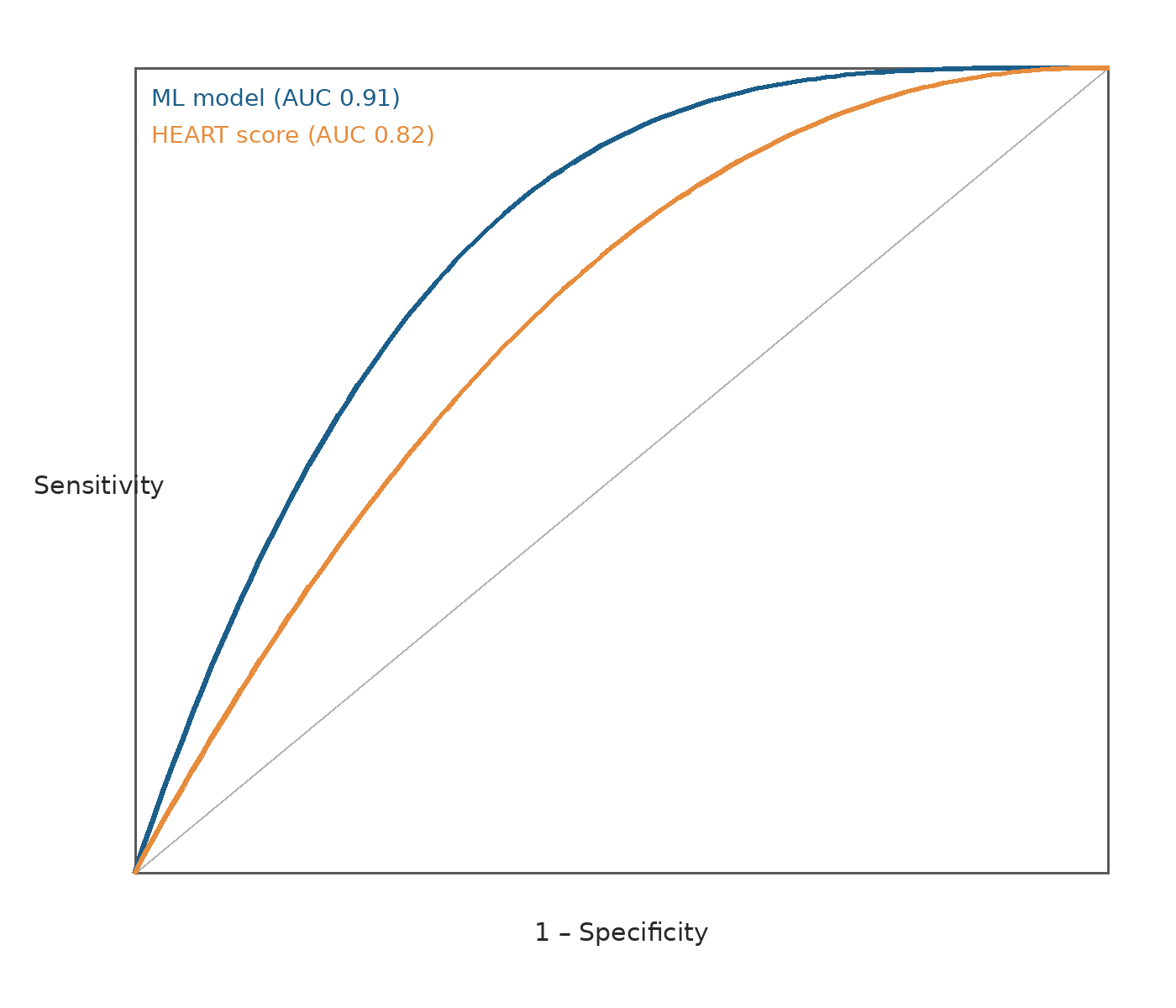
Table 1. Diagnostic performance for 30-day major adverse cardiac events
| Model | AUC (95% CI) | Sensitivity | Specificity |
|---|---|---|---|
| Machine learning model | 0.91 (0.89–0.93) | 96.2% | 71.4% |
| HEART score | 0.82 (0.79–0.85) | 95.8% | 48.9% |
AUC: area under the curve; CI: confidence interval.
Discussion
Machine learning models should be validated prospectively before clinical use.5
References
- Haddad A, Chen B, et al. Chest pain in emergency departments — study 1. Sample J Med. 2024;11:245-256. doi: 10.5555/sjm.2024.290
- Fischer A, Tsai B, et al. HEART score validation — study 2. Sample J Med. 2022;15:84-88. doi: 10.5555/sjm.2022.406
- Haddad A, Wu B, et al. Admissions for low-risk chest pain — study 3. Sample J Med. 2025;28:355-367. doi: 10.5555/sjm.2025.493
- Lin A, Walker B, et al. Definitions of major adverse cardiac events — study 4. Sample J Med. 2016;34:107-118. doi: 10.5555/sjm.2016.340
- Haddad A, Fischer B, et al. Prospective validation of clinical AI — study 5. Sample J Med. 2020;13:71-75. doi: 10.5555/sjm.2020.995
How to cite
Priya Raman, Hsin-Yi Chang, Daniel Walker. Machine Learning Triage for Chest Pain in the Emergency Department: A Retrospective Validation Study. Lumina Journal of Clinical Medicine; 2026; 12(4):97-104. doi:10.5555/LJCM.202612_12(4).0004